
Study abroad in United Kingdom
Visa, costs, healthcare and the best cities for exchange students in United Kingdom.
Capital
London
Languages
English / Welsh (co-official in Wales) / Scottish Gaelic (regional in Scotland)
Academic Year
Autumn term: late September to mid-December. Spring term: mid-January to late March. Summer term: late April to mid-June (exam-heavy). Oxford/Cambridge: 8-week terms (Michaelmas, Hilary/Lent, Trinity/Easter).
Population
67,900,000
Typical Budget
GBP 1,100 - 2,000/month
Study Abroad in United Kingdom: What to Expect
Study abroad in United Kingdom gives students access to some of the world's most prestigious universities, deep academic traditions, and a vibrant cultural landscape. Navigating the post-Brexit landscape requires careful planning, but the reward is an immersive, high-quality English-language education.
Who loves this country?
The United Kingdom is a perfect fit for students who want a prestigious, English-taught education with deep historic traditions, a compact layout that makes regional travel easy, and access to world-class culture and careers.
What makes it special
The UK offers a unique blend of ancient campus heritage (from medieval dining halls to historic student unions) and cutting-edge global cities, all connected by a fast rail network that lets you transition from London street food to Scottish highland hikes in a few hours.
Newcomer shocks
- The academic pace is highly independent and essay-heavy, with small-group tutorials that demand deep weekly reading rather than passive listening.
- Living costs, particularly rent in London, are exceptionally high and require careful budgeting from day one.
- Post-Brexit visa requirements mean paperwork and Immigration Health Surcharges (IHS) are strict and expensive for both EU and non-EU students staying over six months.
- The weather is notoriously damp and changeable, making a waterproof jacket and layers essential year-round.
Safety & Cost Indices
Source: Numbeo crowdsourced data. Lower crime = safer. Higher safety = safer.
Crime Index
Moderate
World avg: 44.7
Safety Index
Moderate
World avg: 55.3
Cost of Living
Expensive
GBP 1,100 - 2,000/month
Budgets in the UK must be managed closely, as living costs are among the highest in Europe. A typical student budget ranges from £1,100 to £2,000 per month, with London representing the absolute peak and northern cities like Manchester offering more manageable costs.
Safety: Overall safe. Pickpocketing in central London Tube stations and tourist areas. Nightlife-area petty crime in most university cities. Knife crime is statistically concentrated in specific London boroughs and is rare in student areas.
Big Cities vs Small Towns
Big Cities
- London is a global academic hub — UCL, Imperial, LSE, King's, and dozens of other institutions make it the world's most competitive university city for international students.
- Networking opportunities in finance, law, tech, and media are unmatched outside New York.
- London is expensive — among the most expensive cities in the world for students, but the concentration of internship and part-time opportunities partially compensates.
- The city's sheer size and diversity means any identity, background, or language finds community instantly.
Small Towns
- Oxford, Cambridge, Edinburgh, Manchester, and Bristol are the UK's top non-London student cities — each with a strong university identity and distinct cultural character.
- Manchester is the most affordable major student city — large student population, legendary music scene, and a diverse, welcoming atmosphere.
- Edinburgh combines world-class academics (University of Edinburgh) with one of Europe's most beautiful city settings — four festivals, Arthur's Seat, and the castle.
- Bristol is the UK's most creative city — independent culture, strong arts scene, and lower costs than London with excellent graduate employment.
Culture & student life in United Kingdom
Adjusting to British culture means embracing politeness, sacred queuing, and the central role of pub socialising. Independent study is heavily emphasised, and students are expected to engage in critical debates during small-group tutorials and seminars.
Social Norms
Queuing is sacred — never skip, never crowd. British social fabric depends on it.
Understatement and irony are defaults. 'Not bad' often means excellent; 'a bit of a problem' might mean a disaster.
Pub culture is central to student life — rounds (buying a round of drinks in rotation) are expected and reciprocated.
Small talk about weather is real and expected — it is a social lubricant, not banal.
Personal space is respected; public affection beyond handholding is unusual outside London/Manchester/Edinburgh clubs.
Politeness is layered: 'please', 'thank you', 'sorry' (even when not your fault) are used many times per interaction.
Daily Rhythm
Local pace07:30–09:30
Morning
British mornings centre on the commute and a coffee. Most grab a meal deal (sandwich + crisps + drink) from a supermarket. Actual cooked breakfast (fry-up) reserved for weekends.
12:00–13:00
Midday
Lunch break is one hour and non-negotiable. Many eat at desks. Pubs serve food from 12:00; Wetherspoons and campus canteens are student staples for cheap hot food.
13:00–18:00
Afternoon
Work and study block. Tea breaks at 11:00 and 15:00 are still culturally real. Libraries and study spaces fill up 15:00–18:00 before evening.
18:00–21:00
Evening
Dinner at home typically 18:30–20:00. Pubs fill from 18:00; after-work pints are deeply ingrained. Last orders at 23:00, or 00:00 in cities with late licenses.
22:00–03:00
Night
Club nights in university towns are heavy on Wednesdays (student night) and weekends. Clubs close at 03:00–04:00 in most cities; London clubs open until 06:00.
Food Culture

Pub lunch (scampi, fish and chips, burger)
GBP 8-14Weekday lunch specials at Wetherspoons or neighbourhood pubs around £6-9. The default social-lunch venue.
Wetherspoons is the student chain: cheap pints (£2.50-3.50) and meal deals. Check the app for order-at-table discounts.
Meal deal (supermarket lunch)
GBP 3.50-5.00Sandwich + snack + drink combo at Tesco, Sainsbury's, Boots, M&S. National student lunchtime institution.
M&S meal deal (£6) is the quality option; Tesco Clubcard members get the £3.40 deal.

Sunday roast
GBP 12-18Meat, Yorkshire pudding, potatoes, vegetables, gravy. A real cultural ritual best experienced at a pub with friends.
Many pubs offer a £10-12 student roast on Sundays — book ahead, they sell out.

Curry (British-Indian classic)
GBP 9-16Chicken tikka masala, madras, biryani. 'Going for a curry' is a national pastime, especially in Manchester, Birmingham, and Bradford.
BYOB (bring your own bottle) Indian restaurants in most cities cut the drinks bill by 60-70%.

Beans on toast
GBP 1–3 / EUR 1.20–3.50Heinz baked beans on buttered toast — a quintessentially British comfort food and student staple, popular for breakfast, lunch, or a late-night snack.
A can of baked beans costs under GBP 0.50 and a loaf of bread under GBP 1 — one of the cheapest filling meals you can make in British student housing.

Scotch egg
GBP 1–3.50 / EUR 1.20–4Hard-boiled egg wrapped in seasoned sausage meat, coated in breadcrumbs and deep-fried. A British picnic and pub staple, sold pre-packaged in every supermarket.
Supermarket scotch eggs are extremely portable and filling — ideal for campus eating between lectures without needing to use a microwave.
Cultural dos & don'ts in United Kingdom
Do
Register with a GP (family doctor) via NHS in your first two weeks — you cannot access most health services without it.
Open a UK bank account within the first month (Monzo, Starling are fastest for students with passport + university letter).
Get a 16-25 Railcard (£30/year) for 1/3 off all rail fares — pays for itself within 3 journeys.
Use contactless payment everywhere — cash is genuinely rare outside small markets.
Join university societies (SU) in Freshers' Week — the clearest social entry point.
Respect the queue, and say 'thank you' to bus drivers — small rituals that matter.
Get a National Insurance Number (NIN) if you plan any part-time work — apply at gov.uk, required for legal employment and tax records.
Use the NHS App to book GP appointments and check your NHS records once registered — far faster than calling a surgery.
Don't
Do not expect late-night food everywhere — most kitchens close 21:00-22:00 outside London.
Do not skip the IHS or late-submit your visa — BRP delays cascade into housing and bank problems.
Do not drink on the Tube or most public transport — it is banned and enforced.
Do not tip 15-20% automatically — 10-12.5% at sit-down restaurants is standard; many bills include service already.
Do not assume Scottish, Welsh, or Northern Irish identity is 'British-first' — it is a sensitive topic.
Do not over-rely on Uber in smaller cities — black cabs and local taxi firms are often cheaper at night.
Do not underestimate UK weather — a waterproof jacket is essential year-round, especially outside London and in Scotland.
Do not leave accommodation viewings or council tax exemption claims until after term starts — student council tax exemption must be registered with the local council.
Things to do in United Kingdom as a student
Student life in the UK is defined by university societies, regional diversity, and the classic weekend rail trips. Whether you are exploring the rugged Scottish Highlands, visiting historic cities like York, or enjoying a traditional Sunday roast, daily routines adapt to a damp but mild climate.

Pub Crawl & Trivia Night
The pub is the British social institution. Student union bars run cheap pints and quiz nights every week.

Hiking the Peak District
England's first National Park. Wild moors, stone villages, and easy day-trip trails. A must for outdoor students in the north.

Edinburgh Day Trip
One of Europe's most dramatic cities. The castle, Old Town, and Calton Hill make for an unforgettable overnight from anywhere in the UK.

Borough Market & Street Food
London's oldest and most famous food market. Free entry, dozens of stalls. Go hungry on a Thursday lunch.

Coastal Walk
The UK has some of Europe's most dramatic coastlines. Rent a car with 4 friends and camp along the trail for under £20/night.

Free Museum Day in London
London's world-class museums are entirely free. Plan a full day hopping between Kensington's museum row.
Festival Calendar
 Lively
Mid-to-late September
Freshers' Week
Every UK university
Week of society fairs, welcome parties, campus tours, and pub crawls that define the start of UK university life. Free events dominate; social membership (SU card) usually auto-granted.
 Lively
Late June
Glastonbury Festival
Worthy Farm, Somerset (near Pilton)
Europe's largest performing arts festival. 200,000 attendees. Tickets (£373+) sell out in 20 minutes each autumn — register on the Glastonbury site by early October.
 Active
November 5
Guy Fawkes Night (Bonfire Night)
Nationwide (biggest in Lewes)
Nationwide bonfires, fireworks, and 'Remember, remember the fifth of November' traditions. Student unions run campus displays — free or £3-5 entry.
 Lively
First three weeks of August
Edinburgh Fringe Festival
Edinburgh, Scotland
The world largest arts festival with 3,000+ shows — comedy, theatre, dance — many free or under £10. Take the train from London for a cheap and unforgettable week.
 Lively
August Bank Holiday weekend (last weekend of August)
Notting Hill Carnival
Notting Hill, London
Europe largest street festival with Caribbean sound systems, steel bands, and jerk chicken stalls through West London streets. Two million people attend over two days.
 Relaxed
Mid-November to December 24
Christmas Markets
Manchester, Edinburgh, Bath, London
UK Christmas markets are spectacular — Manchester Northern Quarter, Edinburgh Princes Street, and Bath Roman Baths markets among the best for mulled wine and handmade gifts.
Travel Tips
- Book National Rail tickets 12 weeks ahead for 'Advance' fares — often 60-70% cheaper than walk-up.
- Megabus and National Express cover long-distance routes for £5-25 (London-Edinburgh from £15).
- TfL Oyster card (or contactless bank card) is the default for London tubes, buses, Overground — daily cap around £8.10.
- Avoid peak travel times (07:30-09:30, 16:30-19:00 weekdays) — fares are often double off-peak.
- Use Trainline, Trainpal, or National Rail app for live delays and platform changes — UK rail runs on real-time disruption info.
Scholarships & student benefits in United Kingdom
Student benefits like the 16-25 Railcard (offering 1/3 off train fares) and Council Tax exemption for full-time students are essential for keeping costs down. Additionally, the post-study Graduate Route visa offers a valuable two-year window to seek employment.
If you are coming to this country
Grants, discounts, and student support you can unlock once you study here.
TOTUM / NUS Card
Official UK student discount card (£14.99/year) with discounts at 200+ retailers including ASOS, Co-op, Amazon Prime Student, cinema chains, restaurants.
NUS / TOTUM
Official sourceTuring Scheme grants (inbound partners)
Some UK universities use Turing Scheme funding or bilateral agreements to offer grants of £300-600/month to incoming exchange students from partner institutions. Check host university's international office directly.
UK Department for Education
Official sourceCouncil Tax exemption
Full-time students are exempt from council tax (£100-250/month household tax). Apply through your local council with a student status letter from your university.
Local UK councils
Official sourceUseful either way
Support and discounts that still matter even if you are not in a strict incoming or outgoing case.
16-25 Railcard
£30/year for 1/3 off all UK national rail tickets including advance, off-peak, and anytime fares. Apply online with photo and student ID.
National Rail
Official sourceUnited Kingdom student visa requirements
Difficulty: EasyVisa requirements are strict post-Brexit. Both EU and international students staying longer than six months need a Student visa, which requires a Confirmation of Acceptance for Studies (CAS), proof of financial self-sufficiency, and paying the mandatory Immigration Health Surcharge (IHS).
Student visa (formerly Tier 4)
Post-Brexit, EU students need a Student visa for courses over 6 months. Requires: CAS (Confirmation of Acceptance for Studies) from a licensed sponsor, IELTS/English proof if required, £1,483/month financial proof for London / £1,136 outside London, and Immigration Health Surcharge (£776/year).
Student visa
Same Student visa route. Application fee £524 from outside UK. Biometric appointment at VFS/TLScontact centre. IHS £776/year for students. Post-study Graduate Route visa (2 years, 3 for PhD) allows job search after graduation.
Student visa
Spanish students need the Student visa post-Brexit. Typical processing: 3 weeks. Spanish home universities cannot issue Erasmus+ grants for UK destinations — check Turing Scheme partner funding or university-specific bursaries.
Standard Visitor visa / ETA (Electronic Travel Authorisation)
Courses under 6 months allow entry on a Standard Visitor visa (or ETA for eligible nationalities from 2024-25) — no CAS needed, no IHS. Cannot work. Good option for summer schools and one-term exchange.
Application Checklist
8 steps-
1
Secure CAS (Confirmation of Acceptance for Studies) from your UK host institution — a licensed sponsor.
-
2
Meet English language requirements (typically IELTS 6.0-7.5 or UKVI-accepted equivalent).
-
3
Prepare financial proof: £1,483/month for London; £1,136/month for the rest of the UK (9 months minimum).
-
4
Pay the Immigration Health Surcharge (£776/year of course) online before visa submission.
-
5
Complete the online Student visa application (fee £524 from abroad, £524+ from within UK).
-
6
Book and attend a biometrics appointment at a VFS Global / TLScontact centre in your country.
-
7
On arrival: collect your BRP (Biometric Residence Permit) or activate your e-visa within 10 days.
-
8
Register with a GP (family doctor) through NHS within the first two weeks of arrival.
Regional Variations
Scotland
Scottish universities run 4-year bachelor's degrees (vs 3-year in England/Wales). Scottish home students have free tuition; international and RUK (Rest-of-UK) students pay international fees (£22,000-30,000/year).
No additional visa requirement.
NHS Scotland is administratively separate but equivalent coverage for IHS-paying students.
Northern Ireland
Separate education system. Queen's Belfast and Ulster University follow similar fees to RUK. Open border with Republic of Ireland — Common Travel Area.
No additional visa; but travel to Republic of Ireland requires additional consideration for non-EEA nationals.
HSC Northern Ireland instead of NHS England.
Healthcare for international students in United Kingdom
How It Works
The NHS (National Health Service) provides universal healthcare free at the point of use. Student visa holders pay the Immigration Health Surcharge (£776/year) as part of their visa fee, which grants full NHS access. EU students on short-term study (<6 months) can use EHIC/GHIC for necessary care; long-term students must pay IHS like non-EU students.
Student Needs
On arrival: register with a GP (General Practitioner) near your accommodation within 2 weeks — this is the gateway for all non-emergency care. Register online via the surgery website or in person with proof of address. Most universities run on-campus GP services for students. Prescriptions cost £9.90/item in England (free in Scotland, Wales, Northern Ireland).
Emergency vs Clinic
Call 999 for genuine emergencies (life-threatening). Call 111 for urgent but non-emergency advice — free, 24/7 phone line that triages and directs to right service. Use hospital A&E (Accident & Emergency) only for true emergencies or after 111 referral — walk-in waits of 4-8 hours are common.
Public Coverage Notes
GP visits, hospital care, and most prescriptions are free at point of use after IHS payment.
Dental and optical care are not fully covered — NHS dental fees apply (£27-326 per treatment band in England).
Mental health services via NHS can have long waits (weeks to months). University counselling services are often faster.
Private Coverage
Most students do not need private insurance given IHS-covered NHS access.
Bupa, AXA, Vitality offer private top-up for faster specialist access (£30-70/month), useful only for non-emergency elective care.
Best cities to study in United Kingdom
Choosing where to study depends on your budget and lifestyle preferences: London is a global financial and cultural hub with unmatched career networking, Edinburgh offers historic beauty and Scottish academic prestige, and Manchester provides a legendary music scene and affordable living.
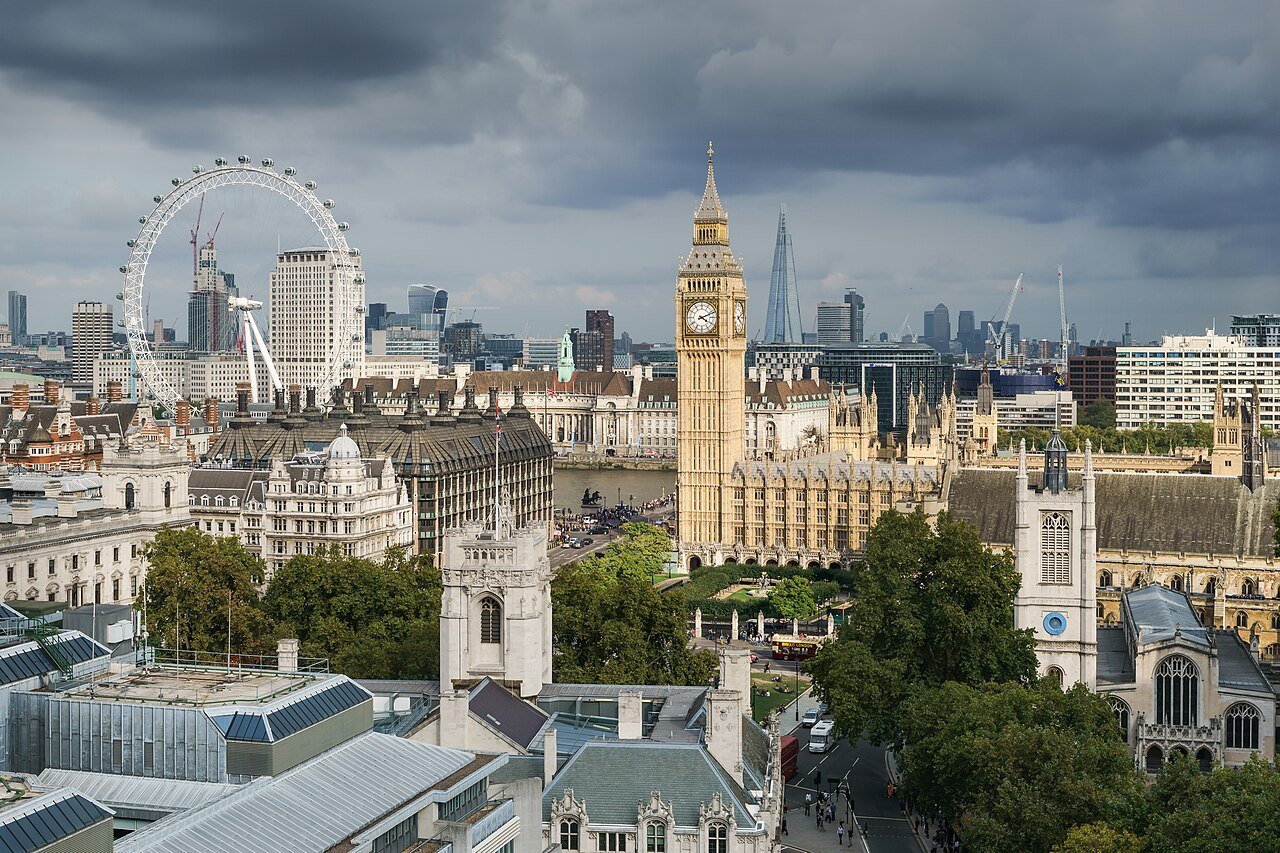
London
The world's most globally connected student city: home to UCL, King's, LSE, Imperial, and 40+ universities hosting 400,000+ international students — at…
Open City Guide
Edinburgh
Scotland's capital and one of Europe's most beautiful student cities: castle skyline, 4-year Scottish degree system, world-class University of Edinburgh, and the…
Open City Guide
Manchester
The UK's most student-dense city: 100,000+ students across 4 major universities, legendary music and football culture, and Russell Group quality at half…
Open City Guide
Bristol
A creative, green, and independent student hub in South West England — home to a prestigious Russell Group university, legendary street art,…
Open City Guide
Glasgow
Scotland's largest and friendliest city — a major cultural hub famous for its legendary live music scene, Victorian architecture, and world-class universities.
Open City Guide
Leeds
A major financial and student hub in Yorkshire, offering a compact single-site campus, legendary student nightlife, and a highly affordable cost of…
Open City Guide