

cheapest erasmus destination 2026: Cheap is not just rent. The best budget destination keeps housing, food, transport and weekend life low without killing university options.
In this guide
Quick answer: Cheapest Erasmus Destination 2026
Look first at Polish and Portuguese student cities, then compare rent availability and flight costs. A cheap city with impossible housing stops being cheap fast.
Destination choice is the single biggest financial decision of your exchange year. The difference between the cheapest and most expensive European exchange cities can reach €1,000 per month — that is €5,000 over a semester. Same Erasmus+ grant. Same quality education. Very different financial stress.
This guide ranks the most affordable European cities for exchange students in 2026. All estimates cover rent, food, transport, and essentials — not nightlife.
Quick Reference — Budget Tiers
| Tier | Monthly Budget | Cities |
|---|---|---|
| Tier 1 — Ultra-budget | Under €800/month | Krakow, Wroclaw, Warsaw (outer), Coimbra |
| Tier 2 — Budget | €800–1,050/month | Porto, Graz, Innsbruck, Valencia, Prague |
| Tier 3 — Mid-range | €1,050–1,350/month | Berlin, Cologne, Rotterdam, Bologna, Vienna |
| Tier 4 — High cost | €1,350+/month | Paris, Amsterdam, Zurich, Stockholm, Copenhagen |
For a side-by-side budget breakdown of all cities see our Study Abroad Budget Guide 2026.
Tier 1 — Under €800/Month
Krakow, Poland — €650–800/month
Consistently the cheapest major exchange destination in Europe. Student room rent: €250–400/month. Local food: €150–200/month. Public transport pass: €12/month. Excellent nightlife at a fraction of Western prices. Academic offer: Jagiellonian University, AGH University, and Cracow University of Economics — all active Erasmus partners. See: Krakow exchange guide.
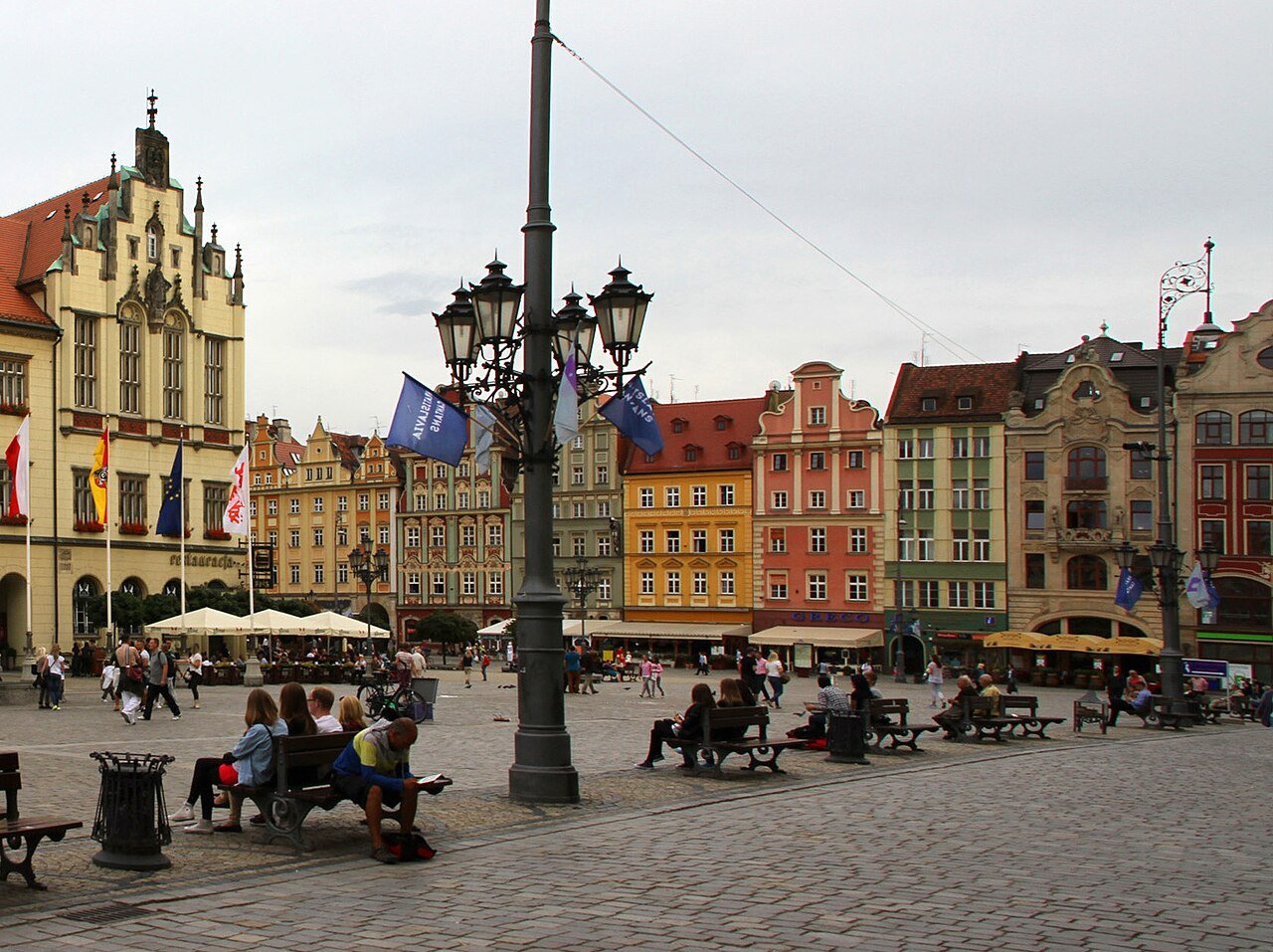
Wroclaw, Poland — €600–780/month
Slightly cheaper than Krakow with a large, growing international student community. Wroclaw University of Science and Technology and the University of Wroclaw both have strong Erasmus programs. See: Wroclaw exchange guide.
Warsaw, Poland — €700–900/month
Capital city prices but still significantly below Western Europe. University of Warsaw and Warsaw School of Economics are major exchange hubs. Strong English usage among young people. See: Warsaw exchange guide.
Coimbra, Portugal — €700–850/month
Portugal’s historic university city. Costs here are roughly 40% lower than Lisbon. The University of Coimbra is one of the oldest in Europe. Student culture dominates the city — the university is the city. See: Coimbra exchange guide.
Tier 2 — €800–1,050/Month
Porto, Portugal — €850–1,050/month
One of Europe’s best-value exchange destinations. University of Porto has extensive bilateral agreements. Housing has risen since 2022 but remains 25–35% cheaper than Lisbon. See: Porto exchange guide.
Graz, Austria — €800–1,000/month
Austria’s second city — significantly cheaper than Vienna (roughly 20% lower across rent, food, and transport). Karl-Franzens-Universität Graz and TU Graz both have strong programs. See: Graz exchange guide.
Innsbruck, Austria — €850–1,050/month
Alpine location, outdoor sports culture, manageable costs. Housing is tight due to the city’s small size — apply early. University of Innsbruck has strong business and law faculties. See: Innsbruck exchange guide.
Valencia, Spain — €850–1,100/month
Best-value major Spanish city for exchange students. Mediterranean climate, beach access, strong student life. Universitat de València and UPV are well-connected Erasmus partners. See: Valencia exchange guide.
Tier 3 — €1,050–1,350/Month
Berlin, Germany — €1,050–1,300/month
Germany’s most affordable major city. Rent is rising but manageable if you apply for student housing early. Freie Universität, Humboldt-Universität, and TU Berlin are all strong Erasmus partners. See: Berlin exchange guide.
Cologne, Germany — €1,000–1,250/month
Smaller than Berlin with a friendlier cost profile and excellent student life. University of Cologne and TH Köln are major exchange hubs. Central Rhine-Ruhr location for easy weekend travel. See: Cologne exchange guide.
Bologna, Italy — €1,000–1,250/month
The oldest university in the world, with a student population that keeps costs reasonable. Food costs are excellent — you are in Italy’s food capital. See: Bologna exchange guide.
Rotterdam, Netherlands — €1,100–1,350/month
25–35% cheaper than Amsterdam. Erasmus University Rotterdam (which literally named the program) is one of Europe’s top business schools. Architecture, diversity, and port culture make it genuinely interesting. See: Rotterdam exchange guide.
Tips for Minimizing Costs on Exchange
- Apply for university housing on day one — subsidized rooms save €200–400/month versus private market
- Shop at discount supermarkets — Lidl, Aldi, Biedronka (Poland), Continente (Portugal). €150–200/month on food is realistic if you cook
- Get a student transport pass — monthly student passes cost €12–30 in most cities versus €1.50–3 per single trip
- Choose Tier 1 or 2 cities — the Erasmus+ grant gap is dramatically smaller, with comparable academic quality
Frequently Asked Questions
What is the cheapest European country for Erasmus+ in 2026?
Poland is consistently the cheapest country for exchange students in Europe, followed by Portugal (outside Lisbon), Hungary, and the Czech Republic. Monthly all-in costs in Polish cities range from €600–900, compared to €1,400–1,900 in Western European capitals.
Is it possible to live on the Erasmus+ grant alone?
In Tier 1 cities (Krakow, Wroclaw, Coimbra) the Erasmus+ grant (€350–450/month for Group C destinations) plus personal savings can make a near-self-sufficient semester feasible. In Western Europe the grant is a contribution — not full coverage.
Are Eastern European universities good quality for exchange?
Yes. Jagiellonian University, University of Warsaw, Charles University (Prague), and Corvinus University (Budapest) are all highly regarded. QS and THE rankings do not fully capture teaching quality at the course level — many exchange students report excellent professors and rigorous coursework in Eastern European universities.
How much does student housing cost in cheap European cities?
University-provided student housing: €150–300/month in Poland, €200–350/month in Portugal, €250–400/month in Austria. Private market adds €50–150/month. Demand exceeds supply in most cities — apply for university housing immediately after receiving your acceptance letter.
Which budget-friendly European city has the best nightlife?
Krakow and Warsaw are the surprise answers — both have thriving nightlife at a fraction of Western European prices. Berlin remains the European benchmark for club culture and is the most affordable Tier 3 city. Porto and Valencia offer excellent nightlife at Tier 2 prices.
Official sources for cheapest erasmus destination 2026
Use these external resources to validate the numbers and rules in this cheapest erasmus destination 2026 guide.