
Study abroad in Poland
Visa, costs, healthcare and the best cities for exchange students in Poland.
Capital
Warsaw
Languages
Polish
Academic Year
Winter semester: October to mid-February (with January-February exam session). Summer semester: mid-February to late June (with June exam session). Resit period in September.
Population
37,650,000
Typical Budget
EUR 550 - 1,000/month
Study Abroad in Poland: What to Expect
Study abroad in Poland is strongest if you want academic tradition, lower living costs and cities that feel genuinely student-driven. Krakow is historic and social, Warsaw is ambitious and urban, and Wroclaw is affordable, international and easy to like.
Who loves this country?
Students who want strong value, historic cities, active student life and Central European travel usually get a lot from Poland.
What makes it special
Poland offers big academic cities, lower everyday costs than much of Western Europe, strong rail links and a social student rhythm that can feel lively without becoming unaffordable.
Newcomer shocks
- Polish admin can be document-heavy, especially for non-EU residence steps.
- Winter is darker and colder than many exchange students expect.
- The student discount system is useful, but eligibility depends on having the right student ID.
- English works well in universities and young circles, but daily errands can still need Polish basics.
- Warsaw feels much bigger and faster than Krakow or Wroclaw.
Safety & Cost Indices
Source: Numbeo crowdsourced data. Lower crime = safer. Higher safety = safer.
Crime Index
Low
World avg: 44.7
Safety Index
Very safe
World avg: 55.3
Cost of Living
Moderate cost
EUR 550 - 1,000/month
Poland's main advantage is value: rent, food and transport usually stretch further than in Western Europe. The budget still depends on city and housing, with Warsaw more expensive and Krakow/Wroclaw easier if you start early.
Safety: Poland is among the safest countries in the EU. Violent crime is rare, including in big-city student districts. Main risks are pickpocketing in Warsaw and Krakow tourist zones and football match days; petty scams targeting tourists in Krakow Old Town.
Big Cities vs Small Towns
Big Cities
- Warsaw is Poland's economic engine — largest job market, rapidly growing tech scene, and the most international city in the country.
- Warsaw University and SGH (Warsaw School of Economics) have strong reputations; the city's infrastructure is modern and efficient after major post-war reconstruction.
- Higher costs than other Polish cities, but Warsaw salaries are also higher — relevant for students doing internships.
- Warsaw is slightly less tourist-saturated and more 'real city' than Kraków.
Small Towns
- Kraków is Poland's cultural capital and top student destination — Jagiellonian University (founded 1364), stunning medieval old town, incredible nightlife (Kazimierz), and low costs.
- Wrocław has a vibrant student scene, beautiful architecture, and a strong tech and business park ecosystem.
- Poznań (UAM university) and Gdańsk (Baltic coast access) are respected university cities with distinct regional identities.
- Polish smaller cities are extremely affordable — a monthly budget of €500–600 covers everything comfortably in Kraków or Wrocław.
Culture & student life in Poland
Polish student culture mixes formal university routines with very social city life. Expect direct admin, strong café and bar scenes, active ESN/student groups, and a mix of Polish pride, history and practical hospitality.
Social Norms
Greetings are formal at first: 'Dzien dobry' (good day) in shops, offices, and to professors. 'Czesc' (hi) is used between friends.
Address professors as 'Pan/Pani Profesor' or 'Pan/Pani Doktor' until invited otherwise. Polish academic culture is hierarchical.
Punctuality matters for class and meetings, but social meals start a flexible 15-30 minutes after the agreed time.
Removing shoes when entering a Polish home is expected — slippers are usually offered.
Tipping in restaurants is 10% — say 'dziekuje' (thank you) when paying as 'keep the change' or it will be returned.
Sundays: most shops are legally closed under the Sunday trading ban (only the first and last Sunday of each month are trading).
Daily Rhythm
Local pace06:30–09:00
Morning
Polish students start early. Breakfast: chleb (dark bread), jajecznica (scrambled eggs), or white cheese with radishes. Milk bars (bar mleczny) open from 08:00 for cheap hot breakfast.
12:00–14:00
Midday
Obiad (dinner/lunch) is the main hot meal — eaten mid-day in Polish tradition. University canteens serve żurek, bigos, pierogi. Milk bars busiest 12:00–14:00.
14:00–18:00
Afternoon
Study and work block. Coffee culture growing fast in Warsaw and Kraków — third-wave cafés packed afternoons.
19:00–21:00
Evening
Lighter kolacja (supper) at home — bread, cold cuts, salad. Evenings are increasingly social for younger Poles; pre-drinks at home before going out.
22:00–04:00
Night
Kraków's Kazimierz district and Warsaw's Praga neighbourhood are student nightlife centres. Clubs cheap by Western standards. Fridays and Saturdays busiest.
Food Culture

Bar mleczny (milk bar) lunch
PLN 15-25 (EUR 3.50-6)State-subsidised cafeterias serving traditional dishes — pierogi, kotlet schabowy, zurek soup. Found in every Polish city.
Bar Mleczny Pod Temida in Krakow and Bar Prasowy in Warsaw are the classic budget pilgrimage stops.

Pierogi (filled dumplings)
PLN 18-30 (EUR 4-7) per portionSignature Polish dish. Vary fillings: ruskie (potato/cheese), z miesem (meat), z kapusta (sauerkraut), or sweet (fruit/cheese).
Frozen pierogi from Biedronka or Lidl are EUR 1-2 per pack and microwave-ready for late-night studying.

Zapiekanka (Polish street pizza)
PLN 12-20 (EUR 3-5)Half-baguette topped with mushrooms, cheese, and ketchup. Krakow's Plac Nowy in Kazimierz is the legendary spot.
After-club zapiekanka at Plac Nowy is a Krakow rite of passage.

Supermarket basics (Biedronka, Lidl, Zabka)
PLN 100-180/week (EUR 25-42)Biedronka and Lidl carry full grocery range at 30-40% lower than German equivalents. Zabka is the 24/7 corner shop.
Biedronka's weekly promo flyer (in app) drives 50%+ discounts on staples.

Żurek (sour rye soup)
PLN 12–25 / EUR 3–6Thick, tangy sour rye soup served in a bread bowl with hard-boiled egg and white sausage (biała kiełbasa). A quintessentially Polish comfort dish.
Order żurek in its bread bowl at a milk bar or traditional restaurant — one bowl is a complete filling meal for under PLN 20.

Bigos (hunter's stew)
PLN 15–30 / EUR 3.70–7.50Hearty stew of sauerkraut and fresh cabbage with various meats, mushrooms, and spices. Poland's most traditional slow-cooked dish, often better the second day.
Cook a big pot of bigos on Sunday — it keeps well in the fridge all week and improves with each reheating.
Cultural dos & don'ts in Poland
Do
Learn 'dzien dobry', 'dziekuje', 'przepraszam' — Polish people warmly notice the effort.
Take off shoes when entering homes.
Validate your tram/bus ticket immediately — non-validated tickets attract fines from controllers.
Use cash or card freely — Poland is highly cashless but small bars and milk bars sometimes are cash-only.
Tip 10% at restaurants and tell the staff before they take the card.
Take advantage of student discounts: ISIC, Karta EURO 26, and the Polish legitymacja studencka unlock major museum, cinema, and intercity train discounts.
Get your PESEL number at the local urzad gminy within the first 2 weeks — it is required for bank account opening, SIM registration, NFZ healthcare, and university admin.
Use bar mleczny (milk bars) for lunch daily — a hot full meal for PLN 15–25 (EUR 3.50–6) is the best-value cooked food in any Polish city.
Pack genuinely warm winter clothing — Warsaw and Krakow regularly reach -10°C to -15°C in January, and wind chill is severe; thermal layers and a proper coat are non-optional.
Don't
Do not arrive at a Polish home empty-handed — flowers (odd number, never 13) or chocolates are expected.
Do not confuse Polish with Russian — Poles are sensitive about national identity and the distinction matters deeply.
Do not assume shops will be open on Sundays — most are closed except the two designated trading Sundays per month.
Do not skip ticket validation on trams; controllers fine 200+ PLN.
Do not joke loudly about WWII, communism, or current Polish politics with strangers.
Do not underestimate winters — temperatures regularly drop to -10°C in January in Krakow and Warsaw.
Do not leave PESEL registration for later — it is the gating step for banking, healthcare enrollment, and most administrative processes; missing it delays everything.
Do not use the term 'Eastern Europe' to describe Poland in conversation with Poles — Central Europe is the accurate and preferred term.
Do not dismiss the Sunday trading ban as minor — bulk grocery shopping on Saturday evening is important, as most shops are closed Sunday and many close early on Saturday.
Things to do in Poland as a student
The everyday rhythm is practical: cheap public transport, student discounts, late cafés, parks, river walks and easy train weekends. Winters need planning, but spring and autumn can be excellent for travel.
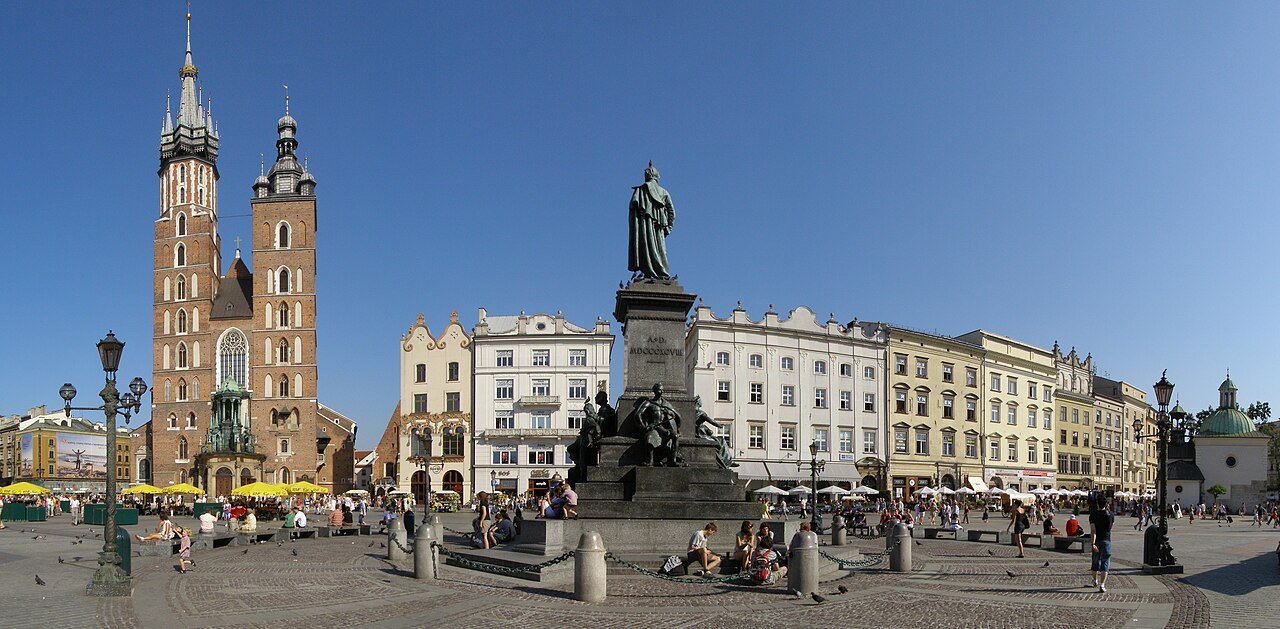
Old Town Krakow Walking Tour
Wander the medieval Market Square and Royal Castle Hill, the heart of Polish heritage.
Learn more
Wroclaw Gnome Hunt
Spot over 600 tiny bronze gnome statues hidden across Wroclaw city center.
Learn more
Auschwitz-Birkenau Memorial
Essential historical visit to the UNESCO-listed WWII memorial site near Krakow.
Learn more
Tatra Mountains Hiking
Trek to Morskie Oko lake or summit Rysy peak in Poland's alpine south.
Learn more
Warsaw Royal Route Cycling
Bike along the historic Royal Route from Old Town to Wilanow Palace.
Learn more
Polish Vodka Museum
Interactive museum tracing 600 years of Polish vodka history with tastings.
Learn more
Gdansk Old Port Walk
Explore the colorful Hanseatic architecture and amber shops of Gdansk waterfront.
Learn more
Wieliczka Salt Mine Tour
Descend into a UNESCO mine with chapels, lakes, and sculptures carved entirely in salt.
Learn moreFestival Calendar
 Active
Late June / early July
Open'er Festival
Gdynia (Tri-City)
One of Europe's biggest open-air music festivals. 4-day pass ~PLN 850 (EUR 200) — student early-bird discounts available.
 Lively
Around June 21
Wianki (Midsummer Wreaths) Krakow
Krakow, Vistula riverbank
Free midsummer festival on the Vistula: live concerts, fireworks, traditional wreath floating. The biggest free music night in Krakow.
 Relaxed
Late November to December 26
Krakow Christmas Market (Targi Bozonarodzeniowe)
Krakow Main Square
Largest Christmas market in Poland. Mulled wine (grzaniec) and oscypek (smoked sheep cheese) at every stall.
 Relaxed
Mid-October
Warsaw Film Festival
Warsaw
FIAPF-accredited international film festival. Student passes ~PLN 80 (EUR 19) for 10-day access.
 Active
Travel Tips
- PKP Intercity intercity trains: 51% student discount with legitymacja. Book 30 days ahead via intercity.pl for cheapest fares.
- FlixBus and PolskiBus cover all major intercity routes from PLN 20 (EUR 4-5).
- Krakow-Berlin direct bus: ~7h, EUR 20-30 — the classic Erasmus weekend trip.
- Wizz Air and Ryanair fly cheap from Warsaw, Krakow, Wroclaw, and Gdansk to most European capitals — book 2 months ahead for EUR 20-40 returns.
Scholarships & student benefits in Poland
Student benefits can be genuinely useful: public-transport and rail reductions, canteen meals, museum discounts, NAWA routes and affordable cultural events. The key is carrying valid student ID and checking local eligibility.
Useful either way
Support and discounts that still matter even if you are not in a strict incoming or outgoing case.
Public transport student discount
Polish students under 26 with a valid legitymacja studencka receive 51% off intercity rail (PKP Intercity), 49% off urban transport monthly passes, and free travel for under-7s. Krakow MPK monthly student pass: PLN 56 (~EUR 13).
PKP Intercity / municipal transport operators
Official sourceNAWA scholarships for international students
Polish National Agency for Academic Exchange (NAWA) offers scholarships for full-degree and exchange students from selected countries: tuition waivers, monthly stipend (PLN 1,500-2,200), and one-time arrival allowance.
NAWA (Narodowa Agencja Wymiany Akademickiej)
Official sourceFree public museum days and student tickets
All Polish state museums offer free entry one day per week (varies by museum). Students under 26 with legitymacja: 50% off paid museum tickets. National museums in Warsaw, Krakow, Wroclaw apply.
Ministry of Culture and National Heritage
Official sourcePoland student visa requirements
Difficulty: EasyEU/EEA students have a straightforward route, but local registration and university paperwork still matter. Non-EU students need to plan visa, residence permit, insurance and proof of funds with enough time for appointments.
National ID card or passport
EU/EEA/Swiss students do not need a visa or residence permit. For stays over 3 months, register your residence (zameldowanie) at the local urzad gminy and apply for a PESEL number. EHIC covers public healthcare.
National type D student visa
Non-EU students must apply for a long-stay (type D) student visa at the Polish consulate in their home country. Required: university acceptance letter, proof of financial means (~PLN 776/month, approx. €180), accommodation proof, valid health insurance, paid visa fee (€80). On arrival, apply for a temporary residence card (karta pobytu) at the voivodeship office (urzad wojewodzki) before the visa expires. Work allowed up to full-time for students with valid residence card.
Application Checklist
8 steps-
1
Confirm whether your nationality requires a Schengen visa (under 90 days) or a national type D student visa (over 90 days).
-
2
Obtain the official acceptance letter from your Polish host university (decyzja o przyjeciu) — required for both visa and residence permit.
-
3
Prepare financial proof of at least PLN 776 per month for the entire stay (~€180/month minimum from 2025).
-
4
Obtain valid health insurance: EHIC for EU students; private insurance covering Schengen with min. €30,000 coverage for non-EU.
-
5
Submit your visa application at the Polish consulate at least 60 days before travel; bring biometric photo, passport, acceptance letter, financial proof, accommodation proof.
-
6
On arrival, apply for a PESEL number at the local urzad gminy (free, takes 1-2 weeks). Required for SIM cards, banking, and university registration in some regions.
-
7
Within 90 days of arrival (non-EU), apply for the karta pobytu (temporary residence card) at the voivodeship office.
-
8
Register at the university international office to activate your student card (legitymacja studencka) — unlocks transport and museum discounts.
Healthcare for international students in Poland
How It Works
Poland operates a public healthcare system (NFZ — Narodowy Fundusz Zdrowia). EU/EEA students with a valid EHIC can access public care at the same cost as Polish citizens. Non-EU students must hold private health insurance that meets Polish visa requirements (minimum EUR 30,000 coverage). Public primary care (POZ — Podstawowa Opieka Zdrowotna) clinics are free for NFZ-enrolled patients but can have long waiting times for specialists. Private clinics (Medicover, LuxMed, Enel-Med) are affordable by Western European standards — a GP visit costs PLN 100–180 (EUR 22–42) and provide immediate access with no queue. Poland's healthcare quality is generally solid in urban areas; Warsaw and Krakow have internationally trained specialists and modern facilities.
Student Needs
EU students: register your EHIC at a local NFZ office (Narodowy Fundusz Zdrowia) within the first month — this entitles you to free GP and specialist care at NFZ facilities. Non-EU students: get your PESEL number first, then either obtain private insurance or check if your student visa package includes NFZ enrollment. Many Polish universities offer group health insurance packages for international students — ask your international office. For fast, English-friendly primary care, Medicover and LuxMed operate clinics near most major university campuses and accept same-day appointments at PLN 100–180 per visit.
Emergency vs Clinic
Call 112 for all emergencies (universal EU number — ambulance, police, fire). Call 999 for ambulance (Polish direct line). Hospital emergency departments (SOR — Szpitalny Oddział Ratunkowy) treat all patients regardless of insurance status — billing sorted separately. For non-urgent care, private clinics like Medicover, LuxMed, or Enel-Med are strongly preferred over public POZ clinics for exchange students — faster, English-speaking staff, and affordable. Most campuses also have a student health center (przychodnia akademicka) offering basic consultations for PLN 0–30.
Public Coverage Notes
NFZ covers GP visits (free), specialist with referral (free), hospitalisation, and most pharmaceuticals at subsidised rates.
EU students with EHIC get the same NFZ-rate access; long-stay students should still get a PESEL for continuity.
Non-EU voluntary NFZ enrollment: approximately PLN 70–90/month (EUR 16–21) — the most affordable public health insurance option in the EU for non-EU students.
Pharmacy (apteka) coverage under NFZ: essential medicines are free or at subsidised rates (30–50% of list price) with a prescription from an NFZ-registered doctor.
Private Coverage
Non-EU students needing to satisfy visa requirements can use private international policies (AXA Assistance, Signal Iduna, Generali) with minimum EUR 30,000 Schengen coverage.
Private Polish insurance (Medicover, LuxMed, PZU Zdrowie) offers better access to English-speaking private clinics with shorter waiting times than public NFZ — monthly plans start around PLN 100–150 (EUR 23–35).
Best cities to study in Poland
Choose by rhythm: Krakow is cultural and compact, Warsaw is bigger and career-oriented, and Wroclaw gives a friendly student city with good cost control.

Krakow
Poland's cultural capital and number-one student destination: a UNESCO old town, dense Erasmus community, exceptional bar/club scene in Kazimierz, and the cheapest…
Open City Guide
Warsaw
Poland's capital and economic engine: rebuilt postwar with bold modern architecture, the country's strongest IT and business university scene, and the best…
Open City Guide
Wroclaw
Lower Silesia's vibrant student capital: 12 islands, 200+ bridges, a colourful market square, and Poland's strongest tech-corridor university scene outside Warsaw.
Open City Guide